Developments · 7 min read
A show house is usually the only finished thing a buyer can stand inside, so the photos of it end up carrying every other unit on the site. Here's how we shoot show units for developers in South Africa, what we fix before the camera comes out, and when it's worth booking twilight on top.
By Kyle de Villiers · Published
Show house photography is a property shoot of the furnished show unit in a development, done so the images can sell every other unit on the site, including the ones still being built. It covers the exterior approach, the full interior in wide angle, and the lifestyle details that make a floor plan feel like somewhere you'd live. For developers it's usually the single most reused set of images in the whole sales campaign.
Definition
Show house photography: A professional photo shoot of a development's furnished show unit, shot to represent all matching unit types. It combines exterior hero images, full wide angle interior coverage and detail shots, and is used across brochures, portals, signage and social for the length of the sales campaign.
The mistake I see most often is treating the show unit shoot like a normal listing shoot. It isn't. A listing shoot sells one house to one buyer. A show house shoot sells a type, repeated twenty or eighty times, to people who will never see the unit they're buying before they sign.
Because it's the only honest thing on site. Renders are renders, and buyers have learned to discount them. The show unit is real, it's furnished, and someone can stand in the kitchen and open a drawer.
So the photos have to do two jobs at once. They have to be beautiful enough to stop a scroll, and accurate enough that nobody walks into their completed unit eighteen months later feeling lied to. That second part matters more than people think. If you shot the show unit with a 10mm lens from the doorway, the lounge looks like a squash court in the photos and like a disappointment in real life.
We shoot wide, but not dishonestly wide. Corner of the room, camera at about chest height, straight walls. If a bedroom is small, we shoot it honestly and win the buyer somewhere else.
Shoot it the week it's signed off and styled, before the first show day. Not after.
I've been called in three months into a sales campaign where the show unit had been walked through by a few hundred people. Scuffed skirtings, a worn patch on the rug by the front door, a cushion missing, dust on the pendant lights. All fixable, but now you're paying someone to fix it before you pay me to photograph it.
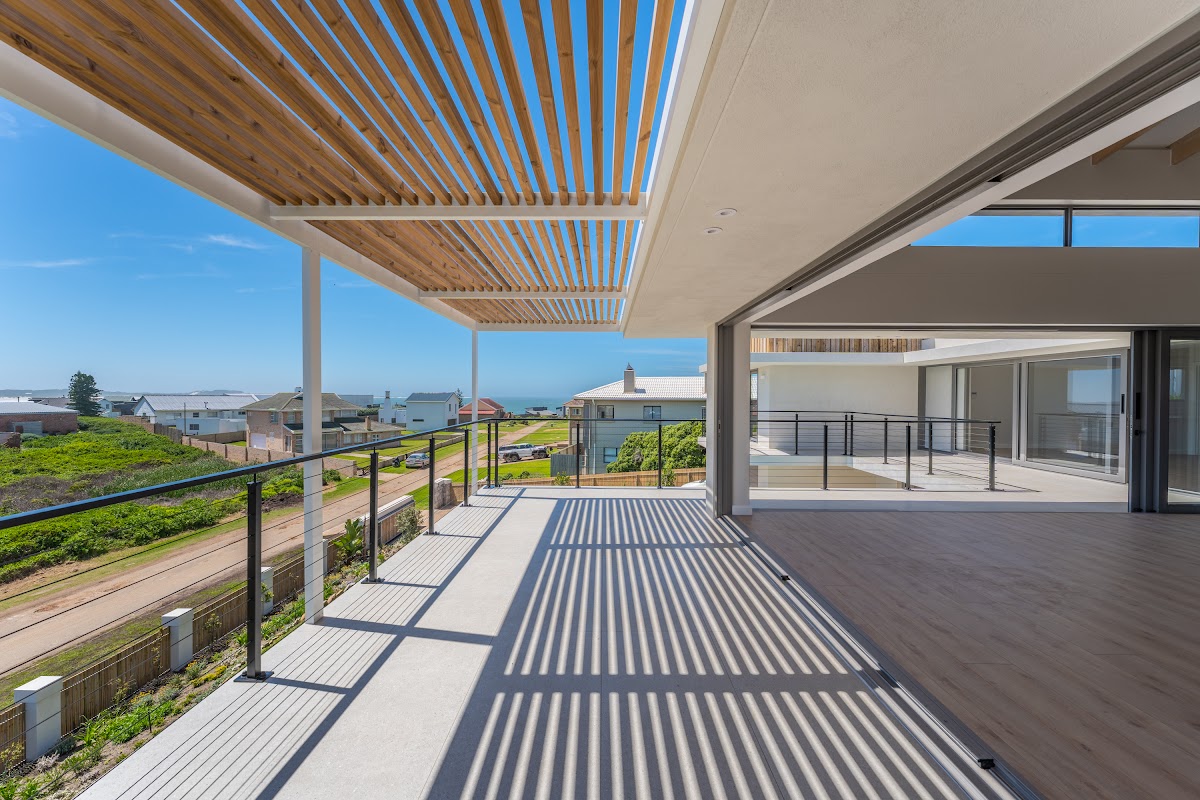
Timing on the day depends on which way the unit faces. North facing patio in the Cape, we'll usually want late morning to early afternoon so the outdoor space isn't in its own shadow. East facing block, we start early. If the complex has unfinished units in the background, we plan the angles around that, or we shoot tighter and lean on the drone add-on to find a frame where the completed phase reads as the whole thing.
One more timing thing. Book it before the landscaping is dead. Garden teams tend to disappear once the show unit opens, and nothing ages a development photo faster than yellow grass at the entrance.
This is where most show unit shoots are won or lost, and it's all free.
For a longer room by room version of this, our prep guide for a shoot applies almost line for line to a show unit.
You need more than one of these, and they do different jobs. Here's how I'd split them.
| Asset | What it proves | Where it works hardest | Weakness |
|---|---|---|---|
| Show unit photography | The finish is real and the space works | Portals, brochure, show day signage, agent social | Only shows the unit types you've actually built |
| CGI renders | The end state of the whole site | Early off plan launch, before anything is standing | Buyers discount them, and they date badly |
| Construction progress photography | Momentum and delivery confidence | Investor updates, buyer reassurance emails, phase two launch | Doesn't sell lifestyle on its own |
| Drone aerials | Position, views, phasing, access | Site plan context, hero shot for the launch | Shows unfinished phases if not planned carefully |
If you're still pre launch, the sequencing matters more than any single asset. We went through that order in off plan marketing material and in the development launch media checklist. Once you're building, construction progress photography keeps the campaign alive between phases.
Yes, and this is the one add-on I push hardest for developments.
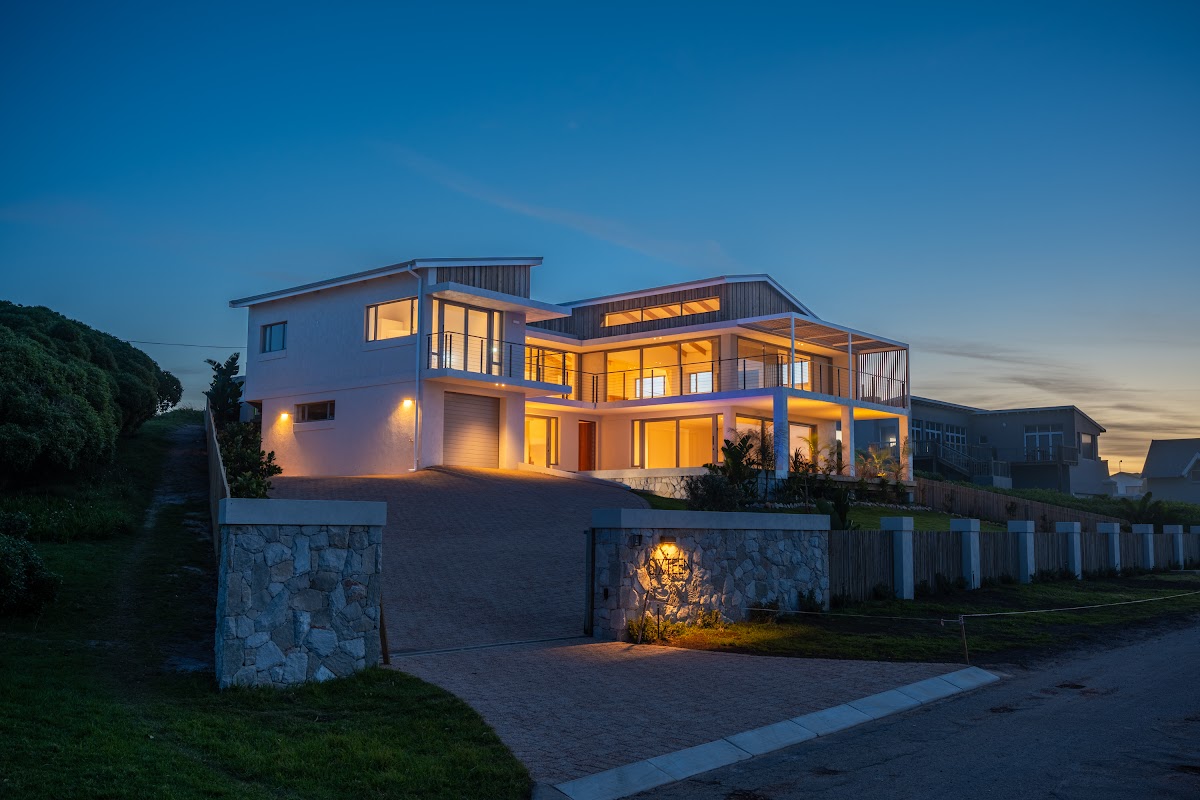
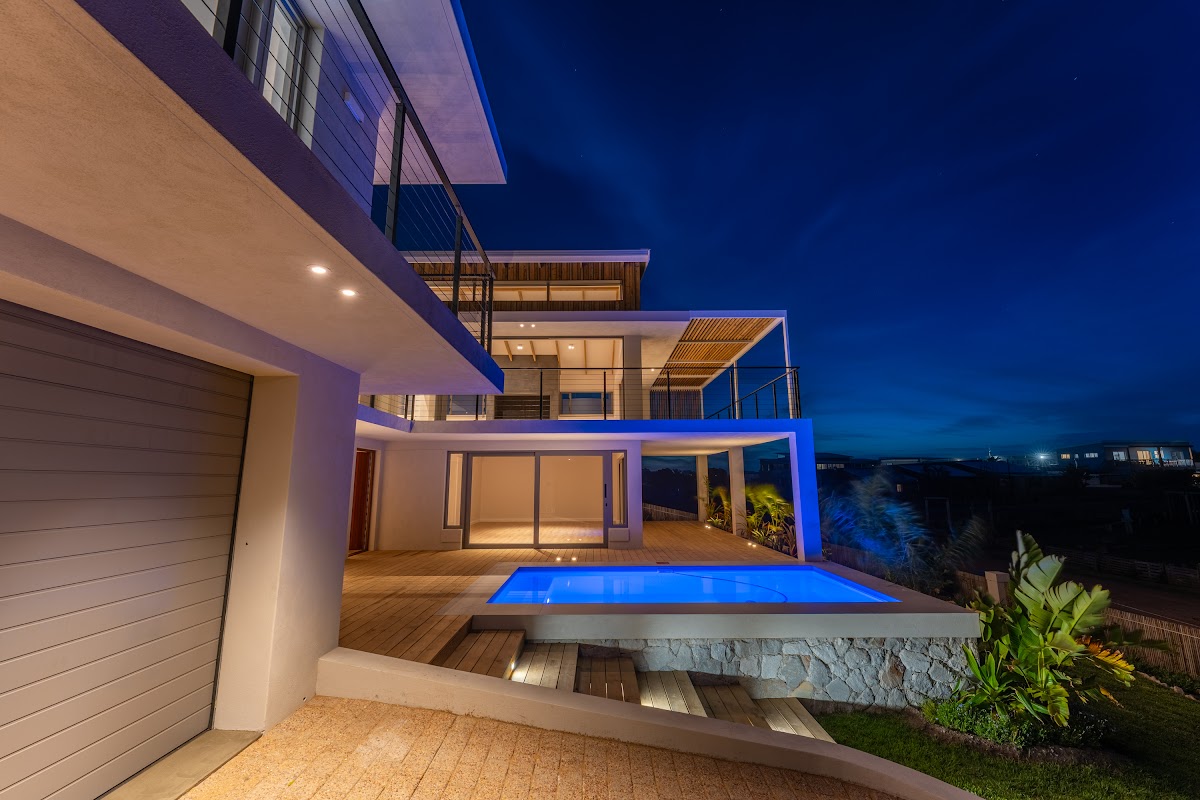
A twilight set of the show unit does something daytime photos can't. It makes a new build look warm instead of new. Lights on inside, patio glowing, pool lit, the block reading as a place people live rather than a site that was handed over last month. That's your hero image for the launch, your billboard, your top of the brochure.
Practically it adds about 45 minutes on site, and we'd normally run it on the end of the day shoot so everything is already styled. You get one short window and the light is gone, so the unit has to be ready before we start. If you want the detail on how that window works, here's our twilight breakdown.
It won't suit every project. A compact sectional title block with no outdoor lighting and parking in front of the facade is not going to gain much from twilight. I'll tell you that on the call rather than take the booking.
Standard shoots come back edited within 48 hours, with exterior hero images, full wide angle interior coverage, colour grading and sky replacement included. Drone, floor plans, virtual tours and twilight are add ons. Delivery is high resolution JPG, standard video, plus 9:16 vertical cuts so your sales agents have something to put on WhatsApp status and Reels the same week. Raw files aren't included.
Booking is usually 3 to 7 days out, with urgent same week slots often available. If the weather turns, rescheduling is free as long as you tell us by 18:00 the day before. We travel nationwide, including the Garden Route and the Eastern Cape coast, with travel quoted separately. Costs depend on unit count, add ons and travel, and the actual numbers live on our pricing page.
If your agency or sales team is running 8 or more listings a month across phases, ask about a retainer. Locked pricing and priority booking makes a real difference when a phase launches on a Friday.
Show house photography is a professional shoot of a development's furnished show unit, used to market all the matching units that buyers can't walk through yet. It typically includes exterior shots, full interior wide angle coverage and detail images. Developers reuse the same set across brochures, portals, signage and social media.
Book it in the week the show unit is styled and signed off, before the first public show day. After a few hundred visitors the unit picks up scuffs, moved furniture and tired styling, and you'll pay to restore it before you pay to photograph it. Lead time with us is usually 3 to 7 days.
A single show unit usually takes a few hours on site, depending on size, how many angles the exterior needs and whether drone is included. Adding a twilight session puts roughly 45 more minutes on the end of the day. Styling and sticker removal should be done before we arrive, not during.
Yes, and most of our development work happens exactly like that. We plan angles and drone height to keep unfinished phases out of frame where possible, and shoot tighter exteriors where the site is messy. If the surroundings are unavoidable, progress photography of the build is often a better sell than hiding it.
Yes. We travel nationwide across South Africa, including the Garden Route, Eastern Cape and coastal developments, with travel fees quoted separately. For multi phase projects it's usually worth planning shoots around build milestones so one trip covers more ground.
Developments
How to shoot a development while it's still going up, and why the first slab matters more than you think.
Developments
What to shoot, when to shoot it, and how to brief your photographer before sales launch.
Developers
The assets you need before the launch event — in order, with rough timing and budget ranges.
About the author
Founder & Lead Photographer, DV Media
Kyle has shot thousands of property listings across South Africa and writes DV Media's field notes on what actually moves a sale. More about Kyle →
From launch assets to progress updates, we build the media plan with you.
Plan the launchSelected property work and shoot notes from DV Media. Unsubscribe any time.
Subscribe